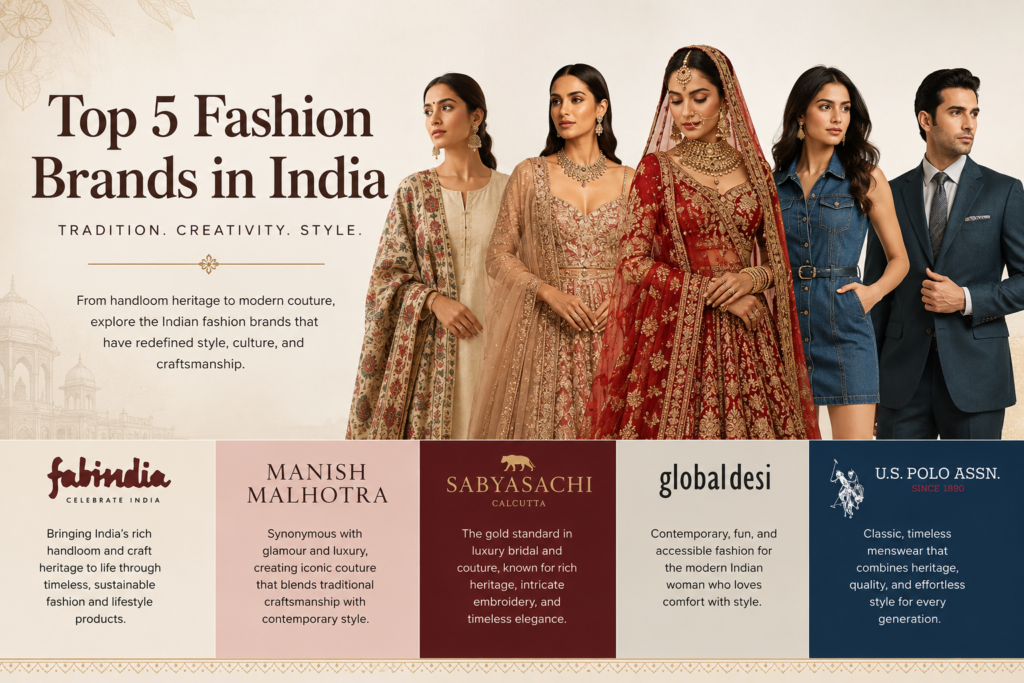
India’s fashion industry sits at a fascinating crossroads. On one side is a textile heritage thousands of years old — handloom weaving, block printing, embroidery traditions passed down through generations of artisan families. On the other is a fast-growing consumer market hungry for contemporary silhouettes, global collaborations, and Instagram-ready style. The brands that have thrived in this landscape are the ones that manage to hold both of these worlds at once.
Fashion in India isn’t just about clothing — it’s tied to weddings, festivals, regional identity, and increasingly, personal branding in a digital-first world. A single Indian wedding might involve five or six outfit changes, each sourced from a different kind of label: a traditional weave for one ceremony, a designer lehenga for another, a crisp Western outfit for the reception. This diversity of need has allowed a wide range of fashion brands to build loyal followings, each carving out a distinct niche.
In this post, we take a closer look at five brands that have shaped how India dresses — spanning ethnic wear, luxury bridal couture, accessible everyday fashion, and classic menswear tailoring. Each has a different story, a different customer, and a different idea of what “Indian fashion” means, but together they offer a fairly complete picture of the industry today.
1. Fabindia
Founded in 1960 by John Bissell, Fabindia has become almost synonymous with Indian ethnic wear done right. What began as a small export business for handwoven textiles has grown into a retail powerhouse with hundreds of stores across the country and a presence in several international markets. The brand’s founding philosophy was simple but powerful: connect rural artisans and weaver communities directly to urban and global markets, cutting out layers of middlemen and preserving traditional craft in the process.
That philosophy still defines the brand today. Fabindia works with a large network of craftspeople across India, sourcing hand-woven fabrics, block prints, and natural dyes from regions known for specific textile traditions. Every kurta, saree, or dupatta carries a story — whether it’s Rajasthani block printing, Bengal’s handloom cotton, or Kutch’s mirror-work embroidery. This isn’t just a marketing narrative; it’s baked into the brand’s supply chain and sourcing model, which has made it one of the more sustainability-conscious large retailers in the country.
Aesthetically, Fabindia occupies a distinct space. Its clothing leans earthy and understated — natural fibers, muted or richly saturated colors, and prints that feel rooted in Indian culture rather than costume-like or overly ornate. This makes it a favorite among people who want ethnic wear that fits comfortably into daily life, not just festive occasions. A Fabindia kurta works equally well at the office, at a family gathering, or paired with jeans for a casual look.
Over the years, the brand has expanded well beyond clothing into home décor, furnishings, personal care, and even organic food products, transforming itself from an apparel label into a full lifestyle brand. This diversification has helped it stay relevant across different consumer needs while maintaining a consistent design philosophy across categories. For many urban Indian households, Fabindia is as much a home décor destination as it is a wardrobe staple.
2. Manish Malhotra
No conversation about Indian fashion is complete without Manish Malhotra. Since launching his label in the early 1990s, he has become one of the most recognizable names in Indian couture, known for dressing some of Bollywood’s biggest stars both on screen and off. His work as a costume designer for Hindi cinema in the 1990s and 2000s helped shape the visual language of an entire generation of films, and that cinematic sensibility carries through into his fashion label.
Malhotra’s design signature is built around opulence — intricate embroidery, rich fabrics like silk, velvet, and organza, and a distinctive blend of traditional Indian craftsmanship with more contemporary, fitted silhouettes. Where older bridal wear often leaned heavily on stiff, structured garments, Malhotra introduced a softer, more fluid approach to Indian couture that felt both grand and wearable. This combination proved enormously popular, particularly for bridal and occasion wear.
His label has become a fixture at major fashion events, including Lakme Fashion Week, where his collections routinely draw significant attention from both the press and the industry. His bridal lehengas, in particular, have achieved a kind of aspirational status in Indian wedding culture — appearing not just on celebrities but as reference points that everyday brides bring to their own designers and tailors as inspiration.
Beyond high-end couture, Malhotra has built out more accessible diffusion lines and collaborations that bring his design language to a broader customer base. This layered approach — flagship couture at the top, more accessible collections underneath — has helped the brand maintain its aspirational status while still growing its commercial reach. It’s a model that several other Indian designer labels have since tried to replicate.
3. Sabyasachi
Sabyasachi Mukherjee’s eponymous label has become something close to the gold standard for luxury Indian bridal wear. Founded in the late 1990s and based out of Kolkata, the brand built its reputation on a very different aesthetic from mainstream Bollywood glamour — one rooted deeply in Bengal’s textile and craft heritage, but interpreted through a maximalist, richly layered design sensibility.
What sets Sabyasachi apart is the sheer density of detail in his work: intricate hand embroidery, vintage-inspired jewelry, heirloom-style textiles, and a color palette that draws heavily from old-world Indian aesthetics — deep reds, golds, and jewel tones rather than pastel or minimalist trends. The label has been closely associated with reviving interest in handloom textiles and traditional Indian jewelry styles, often pairing his clothing lines with statement jewelry collections designed in-house.
The brand’s most talked-about moment on the global stage came through a collaboration with Swedish fast-fashion giant H&M, which introduced Sabyasachi’s design language to international shoppers who might never have encountered high-end Indian bridal wear otherwise. The collection sold out rapidly and sparked considerable conversation about how Indian luxury fashion could translate into more accessible global formats without losing its core identity.
Within India, though, Sabyasachi’s core business remains rooted in luxury bridal and occasion wear, with flagship stores in major cities offering a genuinely immersive retail experience — more art gallery than typical clothing store. For many Indian brides, particularly those planning larger, more traditional weddings, a Sabyasachi outfit remains a genuine milestone purchase, often planned and saved for years in advance.
4. Biba
Biba has built its reputation as the go-to brand for everyday and occasion ethnic wear that’s stylish without being unaffordable. Founded in 1988 by Meena Bindra, the brand initially started as a small boutique operation before growing into one of India’s largest ethnic wear retailers, with a presence in malls and standalone stores across the country as well as a strong e-commerce business.
The brand’s core strength has always been ready-to-wear ethnic wear — kurtas, salwar suits, sarees, and increasingly, Indo-Western fusion pieces — that blend traditional silhouettes with contemporary prints, colors, and cuts. Unlike designer labels that cater to a narrow, high-spending customer base, Biba has focused on accessibility and volume, offering a wide range of price points that make stylish ethnic wear approachable for working women, students, and festive shoppers across income brackets.
This accessibility has been central to Biba’s identity. It’s often the brand people turn to when they want something that feels appropriately traditional for a festival or family function but doesn’t require a designer budget or a long custom-tailoring process. The brand has also been fairly quick to respond to shifting fashion trends, regularly introducing fusion wear, indie-Western silhouettes, and youth-focused collections that keep it relevant to younger shoppers who might otherwise default to Western wear for everyday use.
Biba’s growth has also been closely tied to India’s organized retail boom, with the brand expanding rapidly through mall-based stores as India’s shopping mall culture grew through the 2000s and 2010s. More recently, its strong online presence has allowed it to reach customers well beyond the metro cities where its physical stores are concentrated, cementing its position as one of the most recognized ethnic wear brands in the country.
5. Raymond
Raymond has been a household name in Indian menswear for nearly a century, and its story is somewhat different from the other brands on this list — it began not as a fashion label but as a textile mill. Founded in 1925, Raymond built its early reputation on high-quality wool and worsted fabrics, eventually becoming one of the largest integrated wool and suiting fabric manufacturers in the world.
Over time, the brand extended from fabric manufacturing into ready-made menswear, becoming closely associated with tailored suits and formal wear for Indian men. Its long-running advertising campaign built around the tagline “The Complete Man” became deeply embedded in Indian pop culture, shaping ideas of masculine style and sophistication for decades. For much of the late 20th century, buying “Raymond suiting” fabric and having it tailored by a local tailor was practically a rite of passage for Indian men entering professional life or getting married.
While its fabric and suiting business remains the core of the brand, Raymond has steadily expanded into ready-to-wear formal shirts, trousers, blazers, and wedding-specific menswear collections, positioning itself as something close to a one-stop destination for men’s formal fashion across generations. It has also built out retail formats ranging from fabric-focused stores to full ready-to-wear boutiques, allowing it to serve customers who still prefer bespoke tailoring alongside those who want off-the-rack convenience.
Raymond’s continued relevance says something interesting about Indian fashion more broadly — that even in a market increasingly driven by fast fashion and global trends, there remains a strong, steady demand for classic tailoring and heritage quality, particularly around big life events like weddings.
Final Thoughts
These five brands represent very different corners of Indian fashion — from artisanal, sustainability-driven ethnic wear and maximalist luxury bridal couture to accessible everyday fashion and heritage menswear tailoring. What ties them together is an ability to hold onto craft traditions and cultural relevance while still adapting to modern retail formats, global collaborations, and rapidly changing consumer expectations.
Together, they offer a useful lens into how Indian fashion actually works in practice: it isn’t a single aesthetic or price point, but a layered ecosystem where handloom cotton, hand-embroidered couture, mall-friendly kurta sets, and tailored wool suits all coexist and often serve the same customer at different moments in their life. Whether you’re shopping for a wedding, building an everyday wardrobe, or simply curious about Indian design, these five names are a solid starting point for understanding the breadth of what Indian fashion has to offer.