Personal style is more than just putting on clothes — it’s a quiet form of communication. What you wear tells people how you see yourself before you even say a word. Confidence, professionalism, creativity, and even mood can all be reflected through the way you dress. Yet for many men, the idea of “having style” feels overwhelming, like it requires an overflowing closet, designer labels, or a natural sense of fashion that some people just seem to be born with.
The truth is far simpler. Building a great personal style doesn’t mean owning dozens of outfits or following every passing trend. It means understanding a handful of essential pieces, knowing how they fit and function, and learning how to combine them in ways that look intentional. A well-thought-out wardrobe of ten reliable items will always outperform a closet stuffed with twenty pieces that don’t work together.
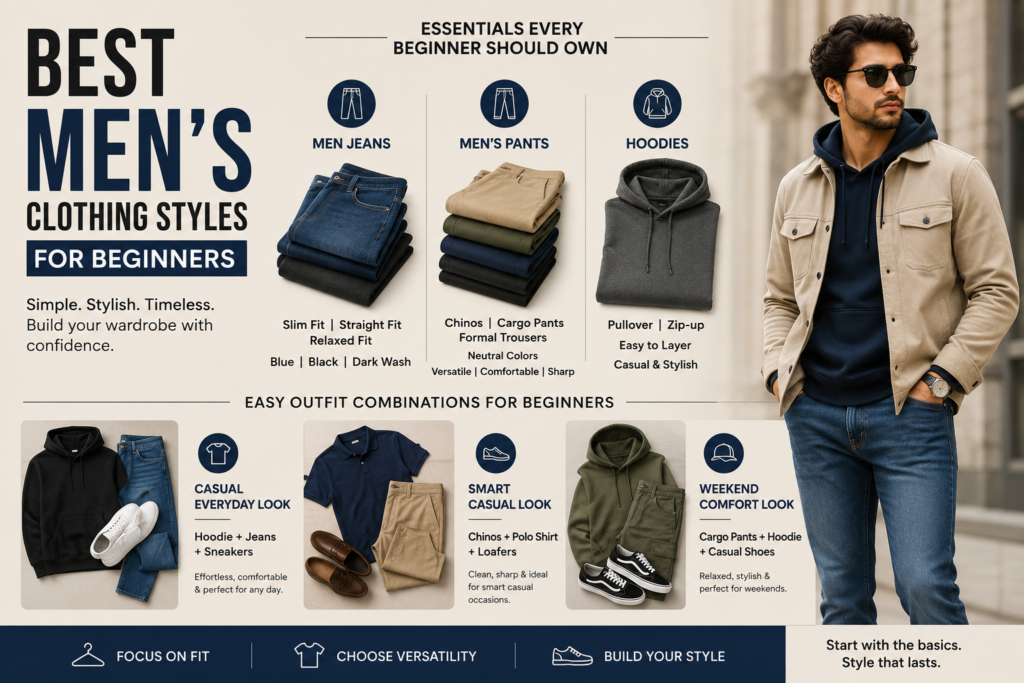
This guide breaks down men’s clothing styles for beginners into practical, easy-to-follow steps. We’ll cover the core wardrobe staples — jeans, pants, and hoodies — and show you how to mix them into outfits that work for almost any casual or semi-formal setting. By the end, you’ll have a clear, simple framework for building a wardrobe that feels like you, without the guesswork.
Essential Men’s Clothing Every Beginner Should Own
Before diving into outfit combinations, it helps to understand the individual building blocks. Think of these as the foundation of your wardrobe — pieces you’ll wear on repeat, in different combinations, for years to come.
Men Jeans
Few items are as versatile as a good pair of jeans. They work for casual hangouts, laid-back weekends, and even smart-casual settings when styled correctly. But not all jeans are created equal, and choosing the right fit and color makes a big difference in how put-together you look.
Types of jeans to know:
- Slim Fit – Fitted through the hip and thigh with a narrower leg opening. Great for a modern, streamlined silhouette. Best suited for guys who want a sharper, more tailored look.
- Straight Fit – A classic, timeless cut that isn’t too tight or too loose. This is often the safest starting point for beginners since it flatters most body types.
- Relaxed Fit – Looser through the hip, thigh, and leg. Ideal for a laid-back, comfortable aesthetic, especially when paired with chunkier sneakers or boots.
Best jean colors for beginners:
- Blue – The most versatile and classic option. Medium-wash blue jeans pair well with almost anything.
- Black – Slightly more formal-looking than blue, black jeans are perfect for evening outings or a sleeker aesthetic.
- Dark Wash – A great in-between option. Dark wash jeans look polished enough for smart-casual settings but still feel relaxed.
Styling tip: For a casual look, pair jeans with a plain t-shirt and sneakers. For smart-casual, swap the t-shirt for a button-down or polo, and add loafers or clean minimalist sneakers instead of chunky athletic shoes.
Men’s Pants
While jeans are a staple, a well-rounded wardrobe needs more than one type of pant. Different occasions call for different silhouettes, fabrics, and levels of formality.
- Chinos – The most versatile pant after jeans. Chinos work for the office, casual outings, and even semi-formal events. Neutral colors like beige, navy, and olive are the easiest to style.
- Cargo Pants – Great for a relaxed, utilitarian look. Cargo pants have made a strong comeback in casual streetwear and pair well with hoodies, boots, or sneakers.
- Formal Trousers – Essential for professional settings, interviews, or events that call for a sharper look. Stick to classic colors like black, charcoal, or navy for maximum versatility.
Choosing the right fit and color: As a beginner, avoid pants that are either too baggy or too tight. A tailored, slightly relaxed fit works for most body types and looks intentional rather than sloppy. When it comes to color, neutral tones (black, gray, navy, beige) are the easiest to mix and match with existing pieces in your wardrobe.
Hoodies for Men
Hoodies have shifted from purely athletic wear to a genuine style staple. They’re comfortable, easy to layer, and instantly casual — making them one of the most forgiving pieces for beginners to experiment with.
Why hoodies are a wardrobe essential: They work in nearly every casual setting, from running errands to meeting friends. A well-fitted hoodie in a neutral color (black, gray, navy, or beige) can be dressed up slightly with the right pants and shoes, or kept fully relaxed for lounging.
Pullover vs. Zip-up hoodies:
- Pullover hoodies tend to have a cleaner, more streamlined look. They’re great under jackets or on their own for a simple, casual outfit.
- Zip-up hoodies offer more versatility since they can be worn open over a t-shirt, giving you a layered look without added bulk.
How to layer hoodies: For cooler weather, throw a denim or bomber jacket over your hoodie for added warmth and texture. Pairing a hoodie with jeans and sneakers is a foolproof combination that always looks put-together without trying too hard.
Easy Outfit Combinations for Beginners
Once you understand the individual pieces, the next step is learning how to combine them. Here are three simple, reliable outfit formulas that work for almost any beginner.
Casual Everyday Look
Hoodie + Jeans + Sneakers
This is the ultimate low-effort, high-reward combination. A plain hoodie in a neutral color, paired with straight or slim-fit jeans and clean white sneakers, creates an effortlessly cool look suitable for errands, casual hangouts, or a relaxed day out. Keep the color palette simple — stick to two or three colors max for a cohesive appearance.
Smart Casual Look
Chinos + Polo Shirt + Loafers
When you need to look slightly more polished — think dinner outings, casual work environments, or semi-formal gatherings — this combination delivers. Chinos in a neutral tone paired with a fitted polo shirt and loafers strike the right balance between comfort and sophistication. This look proves that “smart casual” doesn’t have to be complicated.
Weekend Comfort Look
Cargo Pants + Hoodie + Casual Shoes
For weekends or laid-back days, cargo pants paired with a hoodie and comfortable casual shoes (think slip-ons or low-top sneakers) create a relaxed, utilitarian aesthetic. This combination is perfect for running errands, outdoor activities, or simply lounging around with friends.
Conclusion
Building a stylish wardrobe as a beginner doesn’t require an extensive collection of clothes or an expert eye for fashion. It comes down to three key principles: fit, comfort, and versatility. A well-fitted hoodie, a reliable pair of jeans, and a couple of versatile pants can form the foundation of a wardrobe that works for nearly any occasion.
Start small. Focus on wardrobe basics — jeans, chinos, hoodies, and a few essential shoes — before adding more specific or trend-driven pieces. As you become more comfortable with these basics, don’t be afraid to experiment with different combinations, colors, and layering techniques. Personal style is a process, not a destination, and the best way to develop yours is simply to start wearing what feels authentic to you.
Frequently Asked Questions
1. What are the best men’s clothing styles for beginners? The best starting point includes versatile basics like jeans, chinos, hoodies, and neutral-colored t-shirts. These pieces mix and match easily, allowing beginners to create multiple outfits without needing an extensive wardrobe.
2. Which jeans are best for men? Straight-fit jeans in blue or dark wash are the most beginner-friendly option since they suit most body types and can be dressed up or down. Slim-fit jeans work well for a more modern silhouette, while relaxed-fit jeans are great for a laid-back look.
3. How should men style hoodies? Hoodies pair best with jeans and sneakers for a casual look. For added versatility, layer a hoodie under a denim or bomber jacket, or wear it with chinos for a slightly more elevated casual outfit.
4. What pants should every man own? At minimum, every man should own a pair of jeans, chinos, and formal trousers. These three cover casual, smart-casual, and professional settings, giving you flexibility for nearly any occasion.
5. How can beginners improve their fashion sense? Start by mastering fit — clothes that fit well instantly look more put-together than expensive but ill-fitting pieces. From there, build a small collection of neutral, versatile basics, and gradually experiment with color, layering, and accessories as your confidence grows.
Ready to put these tips into action? Explore our latest collection of men’s jeans, pants, and hoodies to build a stylish wardrobe with ease.