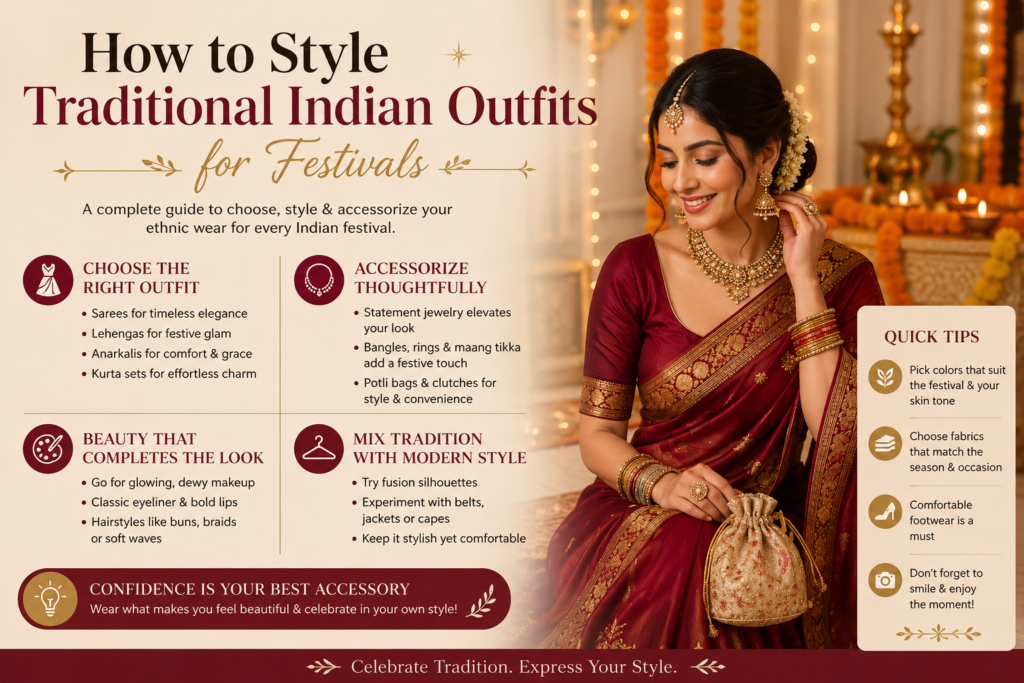
Festivals in India are a riot of color, music, food, and family — and nothing captures that spirit quite like the right outfit. Whether it’s Diwali, Navratri, Durga Puja, Eid, or a wedding-adjacent celebration, what you wear becomes part of the story of the day. Ethnic wear isn’t just clothing during these occasions; it’s a way of connecting with tradition while expressing your own personality.
But with so many options — sarees, lehengas, anarkalis, kurta sets, and endless ways to accessorize — it’s easy to feel overwhelmed. Do you go bold or subtle? Traditional or fusion? Heavy jewelry or minimal? This guide breaks down everything you need to know about choosing and styling Indian festival wear so you look effortlessly elegant, no matter the occasion.
Choose the Right Ethnic Wear for the Occasion
The foundation of any great festival look starts with picking the right outfit. Not every festival calls for the same silhouette, and not every silhouette suits every body type, climate, or vibe. Here’s how to think through your options.
Popular Ethnic Wear Options
Sarees remain the timeless choice for Indian festival wear. A saree instantly elevates a look, whether it’s a rich Banarasi silk for Diwali, a crisp cotton handloom for a daytime puja, or a shimmering georgette drape for an evening event. Sarees are incredibly versatile — the same nine yards of fabric can be draped in dozens of regional styles, from the classic Nivi drape to Bengali, Gujarati, or Maharashtrian styles, each lending a distinct character to the outfit.
Lehengas are festival favorites, especially for occasions like Navratri, weddings, or Karva Chauth. The flowing skirt paired with a fitted blouse and dupatta creates a dramatic, feminine silhouette that’s perfect for dancing and celebrating. Lehengas come in endless variations — from heavily embroidered bridal-style pieces to lighter, flowier options for daytime festivities.
Anarkalis strike a beautiful balance between comfort and grandeur. The floor-length, flared kurta paired with churidar or straight pants offers ease of movement while still looking regal. Anarkalis work wonderfully for festivals that involve long hours of standing, walking, or dancing, such as Navratri garba nights or Eid gatherings.
Kurta sets are the go-to for those who want comfort without compromising on festive charm. A well-tailored kurta with palazzos, a sharara, or churidar pants, paired with a dupatta, works beautifully for daytime festivities, office celebrations, or smaller family gatherings. Kurta sets have also evolved significantly in recent years, with contemporary cuts, asymmetric hemlines, and statement sleeves making them look far from basic.
Selecting Festive Colors, Fabrics, and Designs
Color plays a huge role in festival dressing. Traditionally, certain colors are associated with specific festivals — reds and golds for Diwali and weddings, greens and yellows for spring festivals, whites and pastels for more solemn occasions. That said, modern ethnic wear has moved well beyond these conventions, and jewel tones like emerald green, sapphire blue, deep maroon, and royal purple have become festival staples because they photograph beautifully and suit most skin tones.
Fabric choice matters just as much as color. Silk, brocade, and velvet lend richness and are ideal for evening events or cooler months. Georgette, chiffon, and organza offer movement and lightness, making them better suited for daytime functions or warmer climates. Cotton and linen blends work well for festivals that involve long hours of standing or moving around, since they’re breathable and comfortable.
When it comes to design, embellishments like zari, gota patti, sequins, and mirror work add festive sparkle, while prints such as bandhani, ikat, or block prints bring in an earthy, traditional charm. The key is to match the intensity of embellishment to the occasion — a heavily embroidered piece suits a wedding or major festival, while something more understated works better for casual family gatherings or daytime pujas.
Matching Your Outfit to the Festival and Personal Style
Every festival has its own energy, and your outfit should reflect that. Navratri and Garba nights call for outfits that allow free movement — think lehengas or flared kurtas with comfortable dupattas that won’t slip off while dancing. Diwali, being a more indoor, family-oriented festival, allows for richer fabrics and heavier embellishments since there’s less physical movement involved. Eid celebrations often favor elegant anarkalis, sharara sets, or richly embroidered kurtas paired with delicate dupattas.
Beyond the festival itself, your personal style should guide your final choice. If you gravitate toward minimalism, choose solid colors with subtle embroidery rather than heavily embellished pieces. If you love drama and love being the center of attention, don’t shy away from statement silhouettes, bold color-blocking, or heavy borders. The goal is to feel authentically yourself while still honoring the spirit of the occasion.
Make Your Indian Festival Wear Look Stylish
Choosing the outfit is only half the equation. The way you style it — through jewelry, footwear, makeup, hair, and thoughtful fusion touches — is what transforms a good outfit into a memorable, photo-worthy festival look.
Add Statement Jewelry and Accessories
Jewelry is where you can really let your personality shine. For a traditional saree or lehenga, a statement necklace paired with jhumkas (traditional bell-shaped earrings) creates a classic, festive look. If your outfit already has heavy embroidery or embellishment on the neckline, consider swapping the necklace for a statement maang tikka or a pair of oversized earrings instead — this avoids visual clutter while still adding sparkle.
Bangles remain an essential part of Indian festival styling. Stacking a mix of metallic, colored glass, and stone-studded bangles adds movement and sound — quite literally bringing a joyful jingle to your dance moves during Garba or family gatherings. For anarkalis and kurta sets, a statement choker or layered necklaces work beautifully, especially when paired with a potli bag (a traditional drawstring pouch) that ties the whole look together.
Don’t underestimate the power of smaller details either. A delicate nose ring (or nath for a bolder statement), anklets, and a bindi that complements your outfit’s color palette can elevate your entire look. The key with festival jewelry is balance — if your outfit is heavily embellished, let one or two jewelry pieces take the spotlight rather than layering everything at once.
Choose Comfortable, Fashionable Footwear
Footwear often gets overlooked in festival styling, but it can make or break your comfort throughout a long day or evening of celebrations. Juttis and mojaris — traditional flat or low-heeled footwear — are increasingly popular because they combine comfort with festive embroidery and embellishment that complements ethnic outfits beautifully.
For those who prefer height, block heels are a safer choice than stilettos for festival wear, especially if dancing or standing for extended periods is involved. Kolhapuri chappals offer a rustic, earthy touch that pairs particularly well with cotton kurta sets or block-printed sarees. Whatever you choose, prioritize comfort — festivals often mean hours on your feet, and no outfit looks stylish if you’re wincing in pain by the end of the night.
Complete the Look with Festive Makeup and Hairstyles
Makeup and hair are the finishing touches that tie your entire festival look together. For daytime festivities, a dewy, natural makeup look with a soft eye and a bold lip works beautifully — it photographs well without feeling overdone in daylight. For evening events, you can go bolder with smoky eyes, contouring, and deeper lip shades that hold up under artificial lighting and flash photography.
Hairstyles should complement both your outfit and the practicality of the occasion. A sleek bun adorned with fresh flowers or a delicate hair accessory works wonderfully with sarees and adds a classic, elegant touch. Loose curls or waves pair beautifully with anarkalis and lehengas, adding a romantic, flowing quality that matches the silhouette. For high-energy festivals like Navratri, a braid — whether a simple side braid or an elaborate fishtail — keeps hair secure while you dance the night away.
Blend Traditional and Modern Fashion Elements
One of the most exciting trends in contemporary ethnic wear is the fusion of traditional and modern elements. Pairing a traditional silk saree with a contemporary off-shoulder or halter-neck blouse instantly modernizes the look while keeping the drape authentic. Similarly, a classic lehenga paired with a cropped jacket or a cape-style dupatta adds a fresh, editorial touch.
Kurta sets, too, lend themselves beautifully to fusion styling — think a traditional block-printed kurta paired with wide-leg trousers instead of a churidar, or a Nehru jacket layered over a simple kurta for a more tailored, structured silhouette. Accessorizing with contemporary pieces, like a statement belt cinched over a lehenga or a structured clutch instead of a traditional potli, can also add a modern edge without compromising the festive feel.
The beauty of fusion styling is that it allows you to honor tradition while still feeling current and true to your own aesthetic. It’s about picking one or two modern elements to blend in, rather than overhauling the entire look — this keeps things feeling intentional rather than mismatched.
Bringing It All Together
Styling for Indian festivals doesn’t have to be complicated once you break it down into its core elements: the right outfit for the right occasion, thoughtful color and fabric choices, and styling details — jewelry, footwear, makeup, and hair — that complement rather than compete with your outfit. Whether you’re drawn to the timeless elegance of a saree, the festive drama of a lehenga, the regal comfort of an anarkali, or the effortless charm of a kurta set, there’s an ethnic wear option suited to every festival and every personal style.
The real secret to a standout festival look lies in balance. Let one element — whether it’s your outfit’s embellishment, a statement jewelry piece, or a bold lip — take center stage, and keep everything else in harmony around it. Don’t be afraid to experiment with fusion elements that reflect your personal taste, and always prioritize comfort, especially for festivals that involve dancing, standing, or long hours of socializing.
Ultimately, the right ethnic wear, accessories, and styling choices come together to help you create a look that’s not just stylish, but meaningful — one that lets you celebrate Indian traditions with confidence, elegance, and a touch of your own personal flair. So the next time a festival rolls around, use this guide to plan your outfit with intention, and step out ready to celebrate in style.