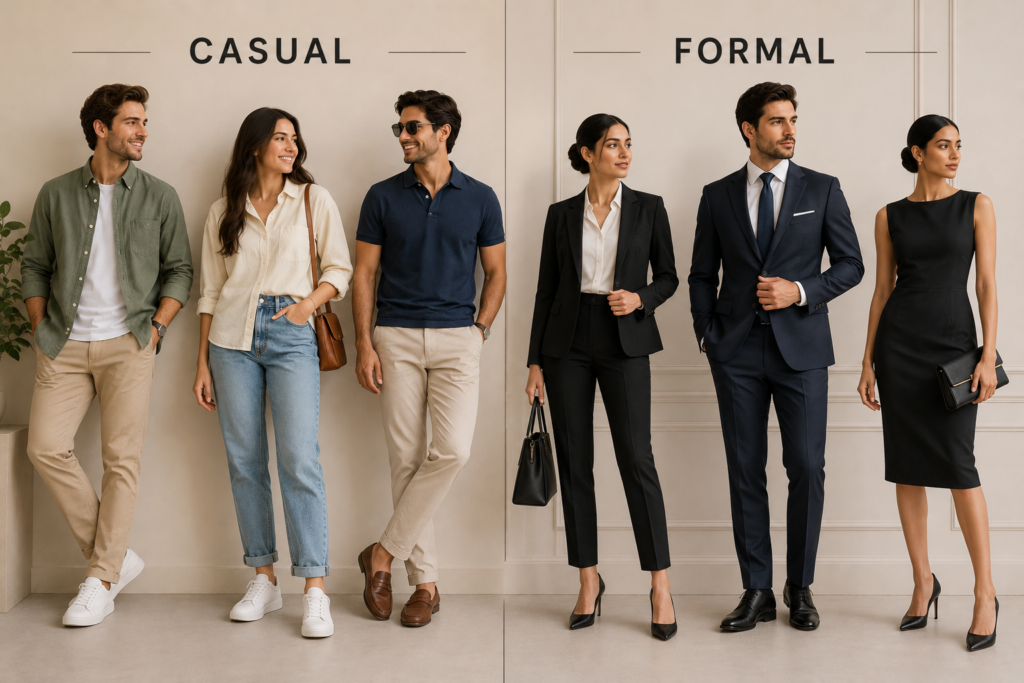
Dress codes can be confusing, especially when you’re standing in front of your closet trying to decide between casual and formal attire. While casual clothing focuses on comfort and flexibility, formal attire emphasizes professionalism, elegance, and structure. Understanding these differences helps you dress appropriately for every occasion — whether it’s a Monday morning meeting, a weekend hangout, or a black-tie gala.
In this guide, we’ll break down exactly what separates casual vs formal attire, look at the clothing staples that define each style, and help you figure out when to wear what — so you never feel underdressed or overdressed again
What Is Casual Attire?
Definition
Casual attire is relaxed, comfortable clothing suitable for everyday activities and less formal workplaces. It’s designed to let you move freely and feel at ease, without sacrificing a put-together look. Casual doesn’t mean sloppy — it simply means the dress code prioritizes comfort over rigid structure.
Common Casual Clothing Staples
Some of the most reliable pieces in a casual wardrobe include:
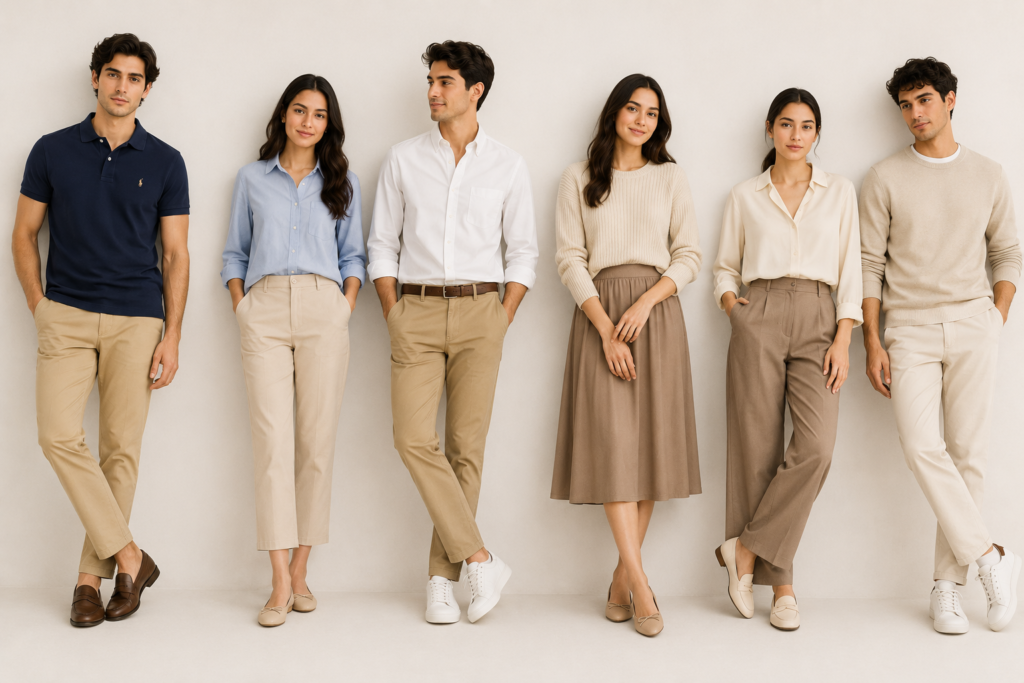
- Polo shirts
- Button-down shirts
- Khaki pants
- Chinos
- Knit sweaters
- Midi skirts and blouses
These pieces are versatile enough to be dressed up slightly for the office or dressed down for a weekend outing.
Casual Footwear
Footwear plays a big role in defining a casual look. Popular choices include:
- Loafers
- Flats
- Minimalist sneakers
- Ankle boots
The goal with casual footwear is comfort paired with a clean, intentional appearance — not gym shoes or flip-flops, but shoes that still look pulled-together.
Suitable Occasions for Casual Attire
Casual attire works well for:
- Daily office wear (in relaxed workplaces)
- Casual Fridays
- Team outings
- Informal meetings
- Weekend gatherings
What Is Formal Attire?
Definition
Formal attire consists of structured, polished clothing designed for professional or special occasions. It communicates seriousness, respect for the occasion, and attention to detail. Formal wear typically follows stricter rules around fit, color, and fabric than casual clothing.
Common Formal Clothing Staples
Key pieces that define formal attire include:
- Matching business suits
- Dress shirts
- Tailored blazers
- Tuxedos
- Formal dresses and gowns
Each of these pieces is built around structure — sharp lines, precise tailoring, and a polished finish.
Formal Footwear
Just as important as the outfit itself, formal footwear completes the look:
- Oxford shoes
- Patent leather shoes
- Closed-toe pumps
- Dress heels
Formal shoes are typically made from polished leather or leather-like materials and are designed to complement tailored clothing.
Suitable Occasions for Formal Attire
You’ll want to reach for formal attire during:
- Job interviews
- Board meetings
- Client presentations
- Corporate events
- Gala dinners
When Should You Choose Casual Attire?
Casual attire is the right call in these situations:
- Casual workplaces
- Team-building activities
- Creative industries
- Social gatherings
- Travel and leisure
If the environment values comfort, flexibility, and personal expression over strict hierarchy, casual attire is usually appropriate.
When Should You Choose Formal Attire?
Reach for formal attire when the occasion calls for polish and professionalism:
- Job interviews
- Client-facing roles
- Business presentations
- Networking events
- Formal ceremonies
When in doubt, it’s almost always better to be slightly overdressed than underdressed — especially in high-stakes professional settings.
Common Mistakes to Avoid
Even with a solid understanding of casual vs formal dress codes, it’s easy to slip up. Watch out for these common mistakes:
- Wearing sneakers with a formal suit — this instantly undercuts the polished look a suit is meant to create.
- Choosing wrinkled casual clothing — casual doesn’t mean careless; wrinkled clothes can look unkempt even in relaxed settings.
- Wearing overly bright colors to professional meetings — bold patterns can distract from the professional tone you’re trying to set.
- Confusing business casual with formal attire — business casual sits in the middle and shouldn’t be treated as a substitute for true formal wear.
- Ignoring dress code requirements — always check the expected dress code for an event ahead of time rather than guessing.
Avoiding these missteps ensures you always strike the right tone, no matter the setting.
Conclusion
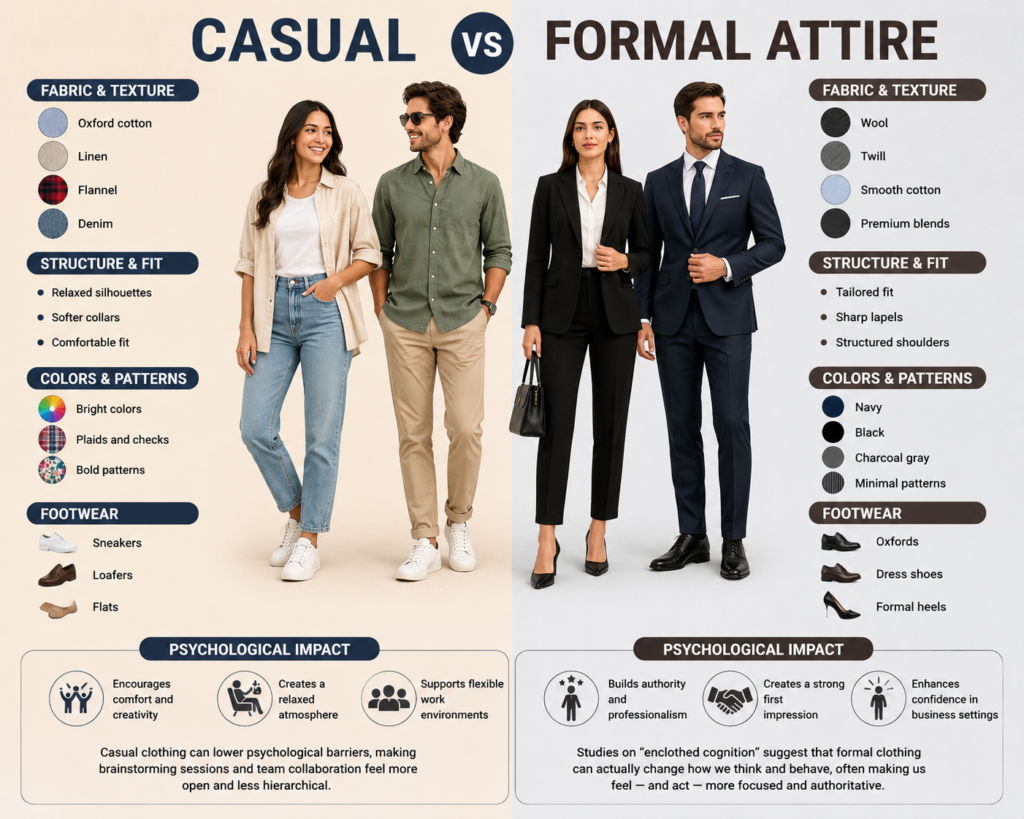
Casual and formal attire serve different purposes. Casual wear prioritizes comfort and flexibility, making it ideal for relaxed workplaces, social gatherings, and everyday activities. Formal wear, on the other hand, emphasizes professionalism and sophistication, making it the go-to choice for interviews, corporate events, and special occasions.
Knowing the difference between casual and formal attire — from fabric and fit to color and footwear — helps you make the right impression and feel confident in any situation. The next time you’re unsure what to wear, ask yourself: does this occasion call for comfort, or does it call for polish? Your answer will point you straight to the right dress code.